Without people, a positive company culture isn’t relevant. Restoration company owners are in the people business, and the people we are responsible for just happen to restore damaged properties. We expect our team members to give us everything they’ve got when they’re at work. But how often do we stop and ask ourselves if we’re giving them everything we’ve got?
If I asked you if your business is focused on safety, what immediately comes to mind? I bet the majority of us are going to say, “Of course! We conduct OSHA required training on day one, we issue everyone a safety bag with Personal Protective Equipment, and we conduct respiratory protection training and fit testing and…”
Safety goes so much deeper than PPE. As leaders, we have a duty to ask ourselves if we’re going beyond jobsite safety and thinking about emotional and psychological safety. Are we creating an environment where people feel safe enough to bring their authentic selves to work? I know some of you just had an urge to stop reading after “authentic selves,” but hear me out.
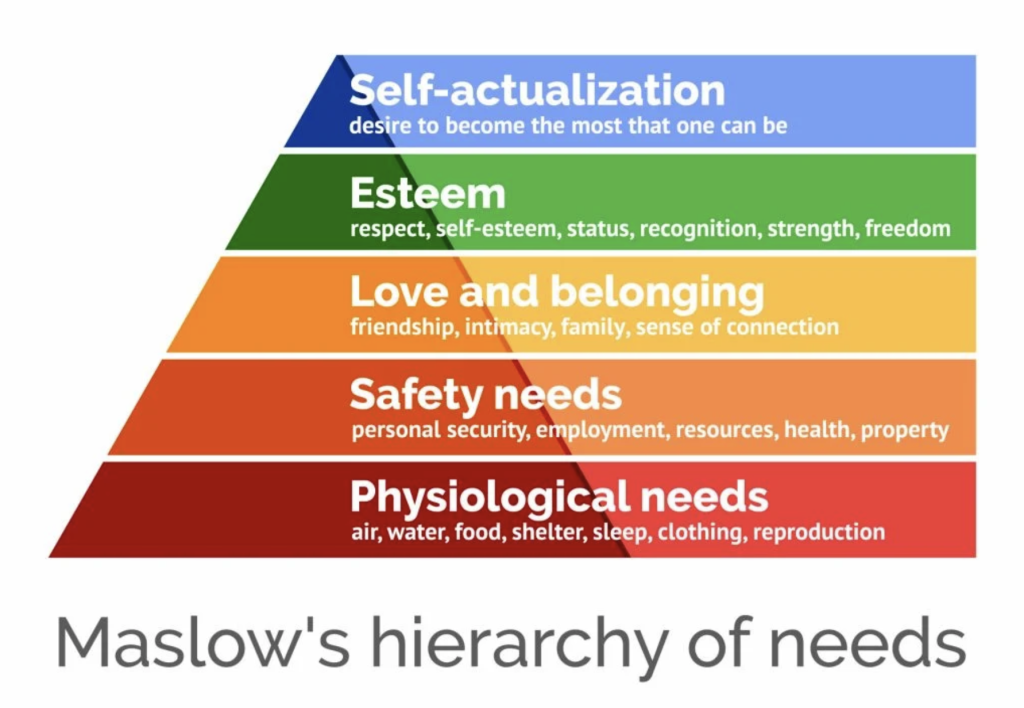
Psychologist Abraham Maslow developed a hierarchy of needs to help us understand human motivation. In its most basic form, Maslow’s hierarchy of needs states that for someone to reach their full potential, their basic needs must be met first. This includes physiological, safety, love & belonging, and esteem needs.
https://www.simplypsychology.org/maslow.html
Business owners and leaders want to see results, but we’re not always thinking about how to get those results. This can lead to disappointment when others don’t meet the expectations we have of them. A business grows at the same rate as its people and if a team member’s needs are not being met, they can’t be fully engaged at work. When leaders are focused on helping their people grow, the organization can begin to achieve amazing results.
To reach the peak of the hierarchy, Self-Actualization, we’ve got to work our way up from the bottom, so let’s dig in to each level.
1. Physiological Needs
Have you ever walked into your facility with fresh eyes and tried to see it from a visitor’s perspective? Is it a clean, welcoming environment? Are you providing adequate facilities such as a restroom that’s cleaned regularly, access to drinking water, and maybe some coffee in the morning? Men, please ask yourselves if your mother would use that restroom!
I try to think of my office like a home away from home for everyone that walks through the door. Remember, we spend the majority of our waking hours at work. We won’t stay somewhere very long if it doesn’t feel good to us. Think of it this way: you are the host, and your employees are your guests. Put your best foot forward with them every day.
Compensation also falls into physiological needs, because it allows someone to provide shelter and food for their families. In addition to a living, competitive base wage, you can set up bonus systems based on this motto: when the company wins, we all win. Put rewards in place for things like being on-call and working after-hours, meeting sales goals, earning positive Google reviews, and hitting financial targets.
Also, be aware of the lifestyle you’re living, compared to the people you’re responsible for. If you have a mindset that you “can’t afford” reward systems, but you can afford the RV and boat that you park at work and the luxury car or truck you drive to work, you may have some work to do to meet the physiological needs of your people.
2. Safety Needs
This is where safety training and PPE come into the picture. A health and safety program is not only something we are required to have in place, it’s something we should do, because we are responsible for the safety of our team members while they’re in our care.
Emotional safety is included in this as well. Do people trust you? Do you have a track record of doing what you say you’re going to do? Do you have a reputation for being calm and respectful or explosive and rude? Do you allow people who aren’t a cultural fit to remain on the team? Leaders need to take small, consistent steps to build trust with their people every day. That doesn’t mean you have to be perfect, but it does mean saying “I’m sorry” or “I made a mistake” when you slip up.
3. Love and Belonging
Your business is a community, a place where people can connect. Remember, a culture is built on shared values and when you begin to add members to your community who share your values, they’ll feel like they’ve found a place where they belong. Create opportunities for people to get together and have fun with each other on a regular basis. Your monthly company meeting is a great way to do that, and I’ll dedicate a column to the monthly meeting later in the series.
You can also support and serve your local community while you build community within your company. Here’s an easy example of how to do this: whenever there’s a local event such as a 5k race, offer it up as a way to get together outside of work. The company pays the registration fees, which are supporting local non-profit organizations. This gives your team a chance to connect away from work, which builds stronger bonds between them.
You may not yet be at the point where you’ll agree with me on this one, but a healthy culture is rooted in LOVE. We spend more time with our team than we do with our own family. When you genuinely care for and appreciate others, you develop love for them. When your people know they are loved, they’ll exceed your wildest expectations. Want proof? Read this Harvard Business Review Article: Employees Who Feel Love Perform Better
4. Esteem
People need to know how they can grow, advance, and achieve results. This is especially true for our technicians! Develop a career path where they can see how to get from entry level to technical expert and show them the investment you’re willing to make in their career.
Put systems in place to ensure you are taking the time to recognize people for their growth and accomplishments. Again, the monthly meeting is a great platform for this, but don’t just wait until one day a month to praise someone. Make it a regular habit to say, “You did an awesome job!” or “Thank you!”
Finally, when someone’s performance isn’t meeting your expectations, have a real-time coaching conversation with them, and don’t wait until an annual review to bring it up. They most likely know they aren’t getting the results both of you would like to see, and their self-confidence could begin to decline if you ignore the issue. You can use the GROW format for a coaching conversation: discuss the Goal, the current Reality, Options to move forward, and who Will do what by when.
5. Self-Actualization
This is the top of the pyramid, where someone can reach their full potential, because they feel welcomed, safe, loved and appreciated, knowing that someone is making an investment in their growth. It means being able to come to work without fear, excited to spend time with like-minded people in an environment where they belong. They feel supported and empowered, and look forward to challenges and opportunities to put their training to work. At this level, employers will see a return on the time and resources they’ve invested in their people.
Think People, Not Numbers
As a business owner or leader, you most likely have big goals and dreams. You can’t achieve those goals on your own. Instead of focusing on your endgame, focus on the people who will get you there. When your culture revolves around people instead of numbers, you’ll get where you want to go a little faster, and probably enjoy the journey a little more. The people we’re responsible for have goals and dreams as well. When we create a nurturing environment, we empower them to reach those goals. It’s a win-win situation.
A recent C&R Restoration Today poll revealed that 53% of respondents would rate their company culture as “unhealthy.” If you want to dramatically change a culture, start by focusing on your people and meeting their basic human needs. The foundation of a positive company culture is a mutually beneficial employee-employer relationship where each one gives the other the best they’ve got. Remembering that our business will grow at the same rate as our people, let’s start each day by asking, “What can I do to help someone grow today?”
Katie Smith, CR
 Katie Smith, CR is the second generation owner of PHC Restoration in North Carolina, an independent company committed to making a positive impact on its team, customers and community. Passionate about servant leadership and building relationships, Katie plays an active role both inside of her company and within the industry. She currently serves as the President of the Restoration Industry Association, the oldest and largest non-profit, professional trade association dedicated to providing leadership and promoting best practices through advocacy, education & professional networking opportunities for the restoration industry.
Related Posts